
Sustainability in International
The International division is taking Lagercrantz’s model for acquiring and developing niche technology companies into international markets. The division includes, for example, the Group’s marine cluster with watertight doors, antennas and robust monitors. The division also includes business-critical solutions, such as hearing aid technology, winter road maintenance equipment, fire ladders, seals and vacuum toilets for railway vehicles.
Material sustainability issues
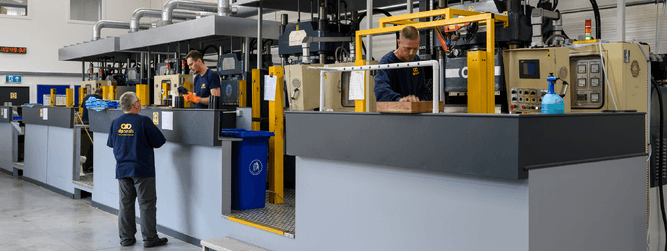
International has operations in countries where the proportion of fossil-free energy is lower. Natural gas is a common energy source in, for example, Denmark and the UK, where several manufacturing companies depend on it in their production processes. During the year, two major companies were acquired, Epoke and Friggeråkers Verkstäder, which also reinforces the focus on a safe production environment.
Several of the division’s companies have segmented and international supply chains where air freight is used for time-critical deliveries. Since air freight has a high carbon intensity, this is a prioritised area of transition, which requires close cooperation with logistics suppliers and improved planning to maintain efficient inventory levels.
For companies with more material-intensive products, such as road salt spreaders and ship doors, dialogue has been initiated with the respective company management regarding minimising the environmental impact. The focus is on strengthening competitiveness by developing products with lower material intensity, more repairs and spare parts sales for extended service life and increasing the proportion of recycled material, while continuing to meet customers’ technical requirements.
Comments on the year’s performance
During the year, the proportion of fossil-free energy increased by 7 percentage points, which contributed to a reduced climate impact from Scope 1 and 2. The injury rate decreased, indicating a positive development in the work environment field. Sick leave is mainly influenced by long-term absence that is not work-related. Scope 3 emissions intensity increased marginally during the year, mainly as a result of changes in the product mix.
Future activities
Going forward, the focus will be on identifying alternative energy sources to fossil fuels and on implementing measures to improve energy efficiency. Companies using air freight are expected to analyse their underlying needs and consider what can be done in the future to reduce their climate impact while creating business value.