
Sustainability in TecSec
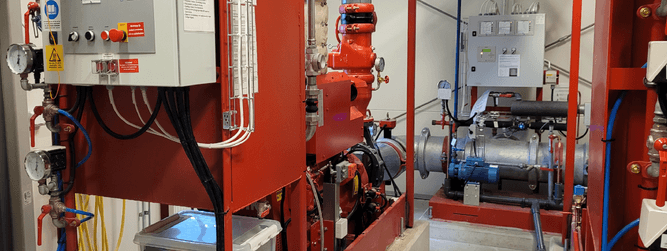
TecSec provides products and solutions with clear societal benefits, such as emergency telephony, fire alarms, fire suppression systems, intrusion and access control systems, road safety cameras, fire-rated doors and roof safety. The product range also includes scaffolding, slip-resistant platforms and fall protection systems, which enable safe maintenance work and reduce the risk of occupational accidents. By preventing accidents and reducing risks, these solutions help to protect both people and critical assets.
Material sustainability issues
TecSec includes several of the Group’s largest manufacturing units, such as PcP in Vildbjerg (Denmark) and CWL in Mora (Sweden), which means that material and energy efficiency and a good working environment are key priorities. The climate impact mainly comes from the purchase of materials, such as steel and aluminium for gratings, roof safety and scaffolding, timber and glass for fire doors and electronics for security systems. Production facilities are mainly located in the Nordic countries, but also in Poland, Estonia and the UK – where oil and gas are still common sources of heating. This means that there is potential to increase the proportion of fossil-free energy, which currently amounts to 47 percent. For companies where a larger proportion of manufacturing takes place at suppliers, the focus is on setting sustainability requirements in the purchasing process and on resource-efficient product design. This helps to reduce the environmental impact of purchased products while strengthening customer value.
Comments on the year’s performance
Two production facilities have been merged in the UK, which has reduced the use of oil and gas, while own production of renewable energy has increased. The injury rate has increased, driven by a number of minor incidents in one of the division’s largest manufacturing companies, and action plans have been implemented.
Future activities
TecSec is actively working with supportive dialogue at companies which have a significant impact. The focus is on PcP and CWL, where work is underway to reduce waste, improve design to reduce weight without compromising quality, and on collaboration with suppliers regarding raw materials with a lower climate impact. An important element is finding customers who are prepared to lead the shift to more sustainable solutions. In addition, self-generated solar energy is in focus in the UK and Poland, where the business case for this is strong, as well as a move from gas to district heating in Denmark. Increasing the use of environmentally friendly fuels in customers’ backup power systems and sprinkler pumps is continuing.